Instacart Product Page
Scope
UX/UI Design
Company
Instacart
Year
2021
Industry
Commerce
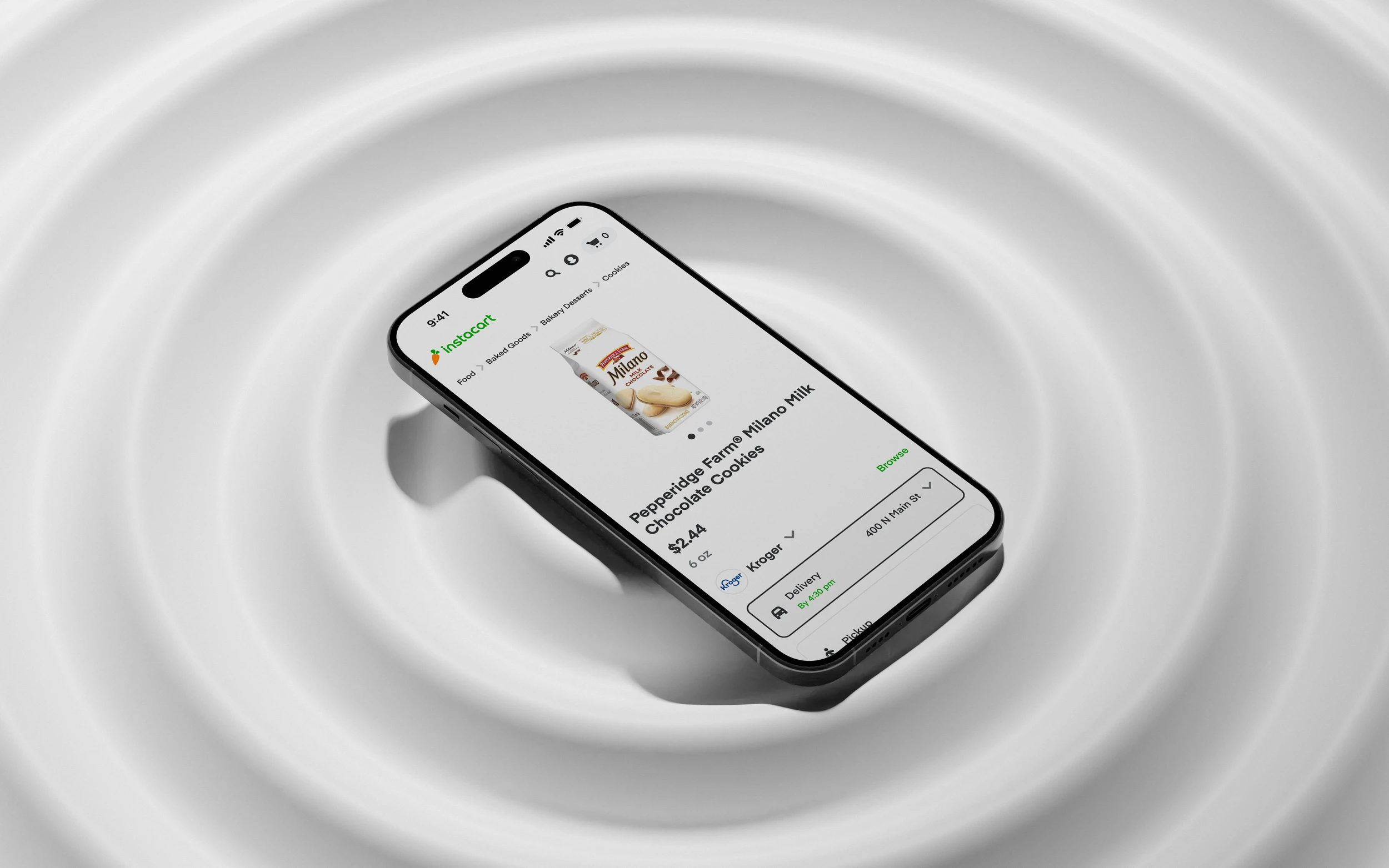
To address low conversion rates (~1%) on Instacart's product landing pages, the redesign focused on enhancing the experience for new customers—particularly those arriving through paid marketing channels (PLAs). The goal was to streamline the design, build trust, and simplify the path to purchase. Key updates included clearer product information, an intuitive shopping cart experience, and an enhanced design language to boost user engagement and drive higher conversions across both mobile and desktop platforms.
Context
Instacart's product landing page faced a low 1% conversion rate due to a cluttered, outdated UX that failed to convert high-intent traffic from paid marketing. New users often felt skeptical about price markups and lacked clarity. The objective was to create high-trust, functional gateways that effectively moved users from initial discovery to a completed order.
Approach
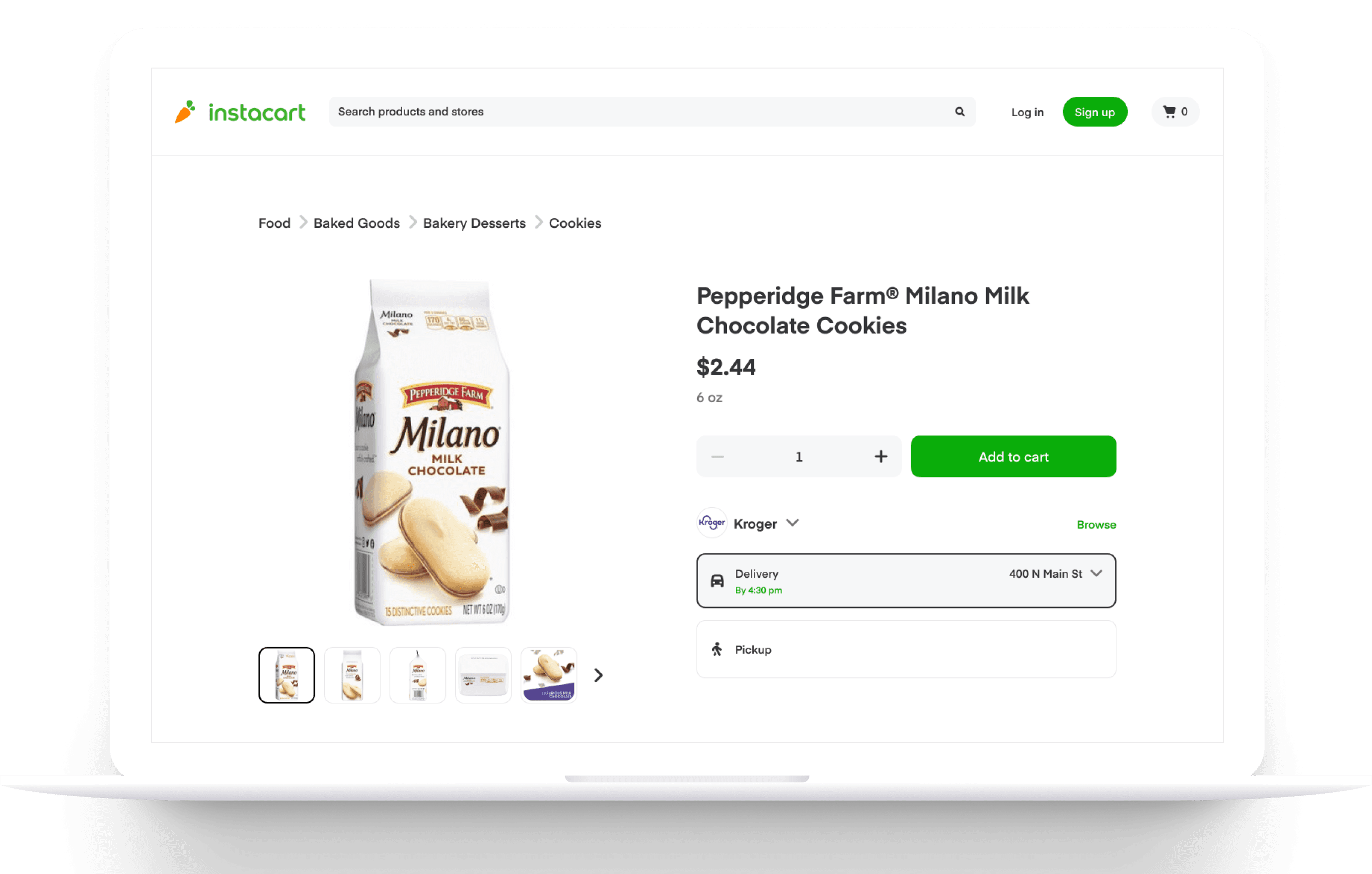
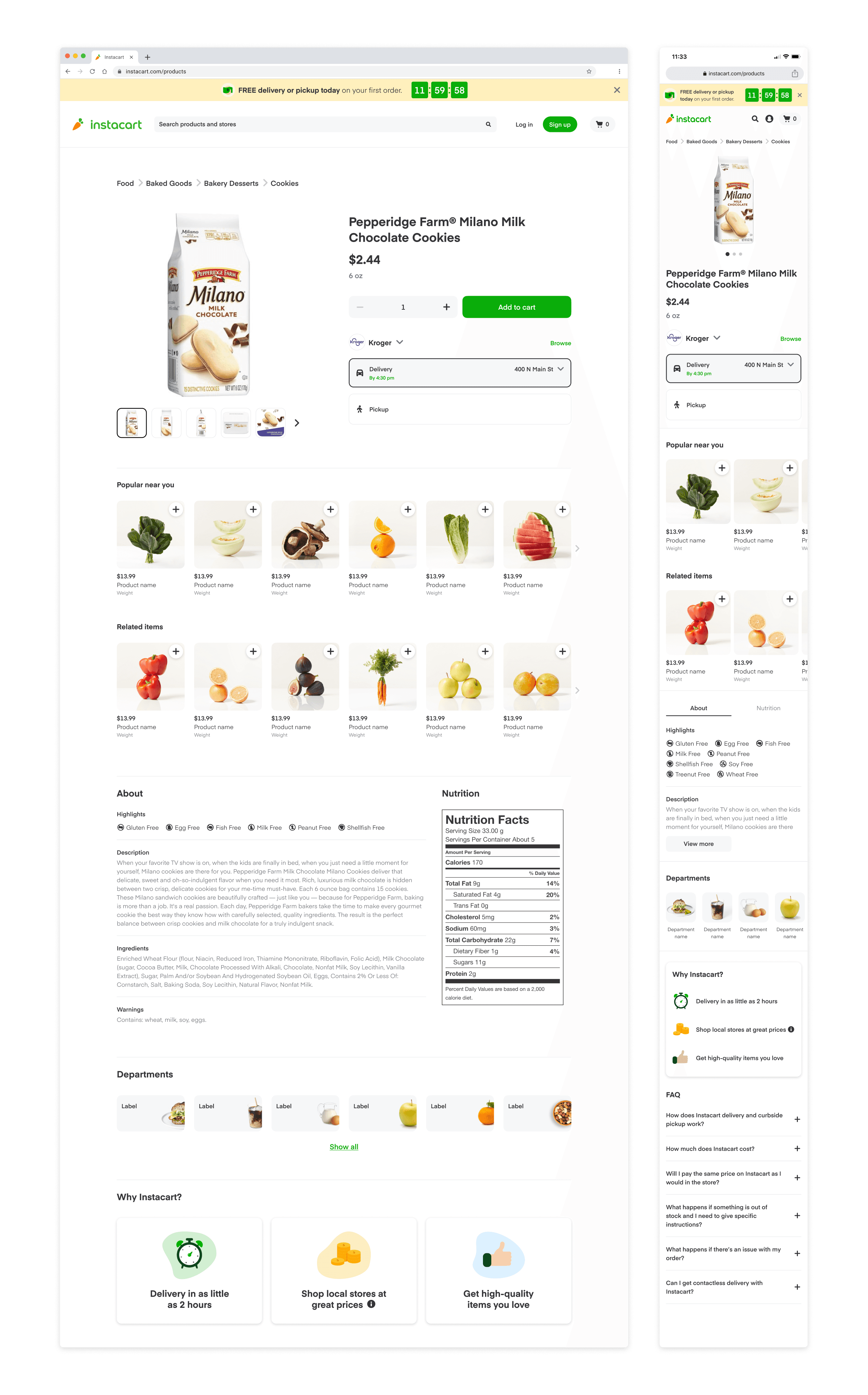
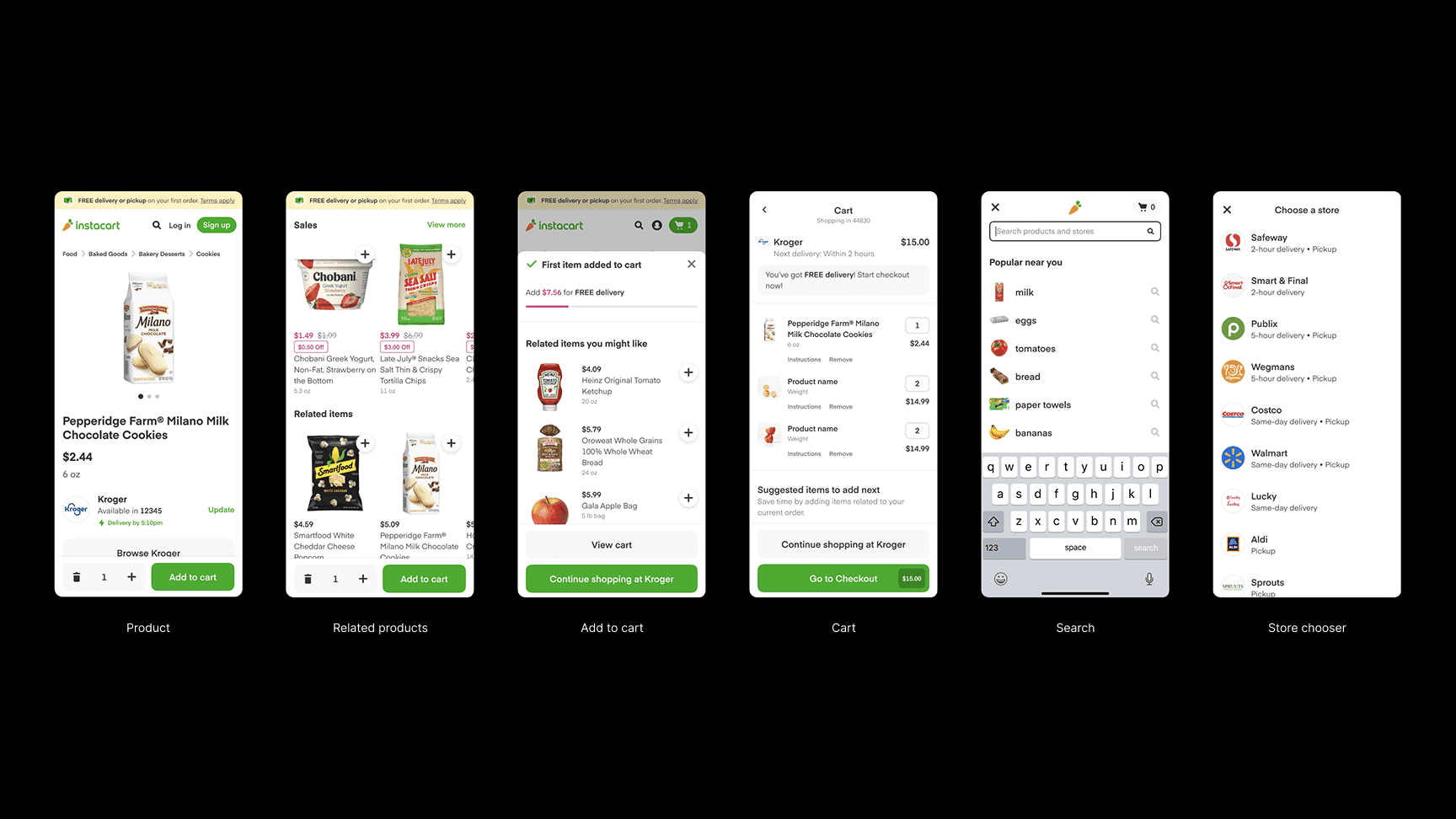
The redesign focused on maximizing shoppabilty and transparency by streamlining information architecture and integrating educational modules to demystify pricing and delivery. The shopping experience was expanded to include service-type selection and high-conversion features like add-to-cart and in-cart suggestions, encouraging users to build a full basket through a unified and modern design language.
Outcome
This project drove higher user intent, resulting in a 5.8% lift in the 7-day order rate and 7.8% increase in 7-day activation. By addressing user concerns and replacing visual clutter with a guided shopping journey, the redesigned experience converts first-time visitors into active customers.
Instacart Product Page
Scope
UX/UI Design
Company
Instacart
Year
2021
Industry
Commerce
To address low conversion rates (~1%) on Instacart's product landing pages, the redesign focused on enhancing the experience for new customers—particularly those arriving through paid marketing channels (PLAs). The goal was to streamline the design, build trust, and simplify the path to purchase. Key updates included clearer product information, an intuitive shopping cart experience, and an enhanced design language to boost user engagement and drive higher conversions across both mobile and desktop platforms.
Context
Instacart's product landing page faced a low 1% conversion rate due to a cluttered, outdated UX that failed to convert high-intent traffic from paid marketing. New users often felt skeptical about price markups and lacked clarity. The objective was to create high-trust, functional gateways that effectively moved users from initial discovery to a completed order.
Approach
The redesign focused on maximizing shoppabilty and transparency by streamlining information architecture and integrating educational modules to demystify pricing and delivery. The shopping experience was expanded to include service-type selection and high-conversion features like add-to-cart and in-cart suggestions, encouraging users to build a full basket through a unified and modern design language.
Outcome
This project drove higher user intent, resulting in a 5.8% lift in the 7-day order rate and 7.8% increase in 7-day activation. By addressing user concerns and replacing visual clutter with a guided shopping journey, the redesigned experience converts first-time visitors into active customers.
Instacart Product Page
Scope
UX/UI Design
Company
Instacart
Year
2021
Industry
Commerce
To address low conversion rates (~1%) on Instacart's product landing pages, the redesign focused on enhancing the experience for new customers—particularly those arriving through paid marketing channels (PLAs). The goal was to streamline the design, build trust, and simplify the path to purchase. Key updates included clearer product information, an intuitive shopping cart experience, and an enhanced design language to boost user engagement and drive higher conversions across both mobile and desktop platforms.
Context
Instacart's product landing page faced a low 1% conversion rate due to a cluttered, outdated UX that failed to convert high-intent traffic from paid marketing. New users often felt skeptical about price markups and lacked clarity. The objective was to create high-trust, functional gateways that effectively moved users from initial discovery to a completed order.
Approach
The redesign focused on maximizing shoppabilty and transparency by streamlining information architecture and integrating educational modules to demystify pricing and delivery. The shopping experience was expanded to include service-type selection and high-conversion features like add-to-cart and in-cart suggestions, encouraging users to build a full basket through a unified and modern design language.
Outcome
This project drove higher user intent, resulting in a 5.8% lift in the 7-day order rate and 7.8% increase in 7-day activation. By addressing user concerns and replacing visual clutter with a guided shopping journey, the redesigned experience converts first-time visitors into active customers.